
Spillover effects
Spillover effects — when an intervention benefits or harms people beyond its direct recipients — are common in infectious disease but under-explored for interventions other than vaccines. My group published two papers focused on this topic, reviewing evidence across low- and middle-income countries and defining the parameters and study designs needed to measure spillover rigorously. We have led studies to empirically estimate spillover effects of a diverse set of health interventions, including water and sanitation, school-located influenza vaccination, and malaria prevention interventions.
Spillover effects on health outcomes in low- and middle-income countries: a systematic review. International Journal of Epidemiology. 2017.
Spillover effects in epidemiology: parameters, study designs and methodological considerations. International Journal of Epidemiology. 2017.
A Randomized Controlled Trial to Measure Spillover Effects of a Combined Water, Sanitation, and Handwashing Intervention in Rural Bangladesh. American Journal of Epidemiology. 2018.
Funding: International Initiative for Impact Evaluation, NICHD, NIAID, Flu Lab

Trial design for evaluating infectious disease interventions
Designing trials to rigorously measure intervention effects in infectious disease requires careful attention to clustering of infectious outcomes in space and social networks. We conducted a methodological review of the ring trial design, which randomizes individuals near infected cases and is particularly well-suited for evaluating reactive interventions. In addition, we conducted a study showing how geographic pair matching within cluster-randomized trials can increase precision and reduce confounding.
A Review of the Ring Trial Design for Evaluating Ring Interventions for Infectious Diseases. Epidemiologic Reviews. 2022.
Geographic pair matching in large-scale cluster randomized trials. Nature Communications. 2024.
Funding: NIAID
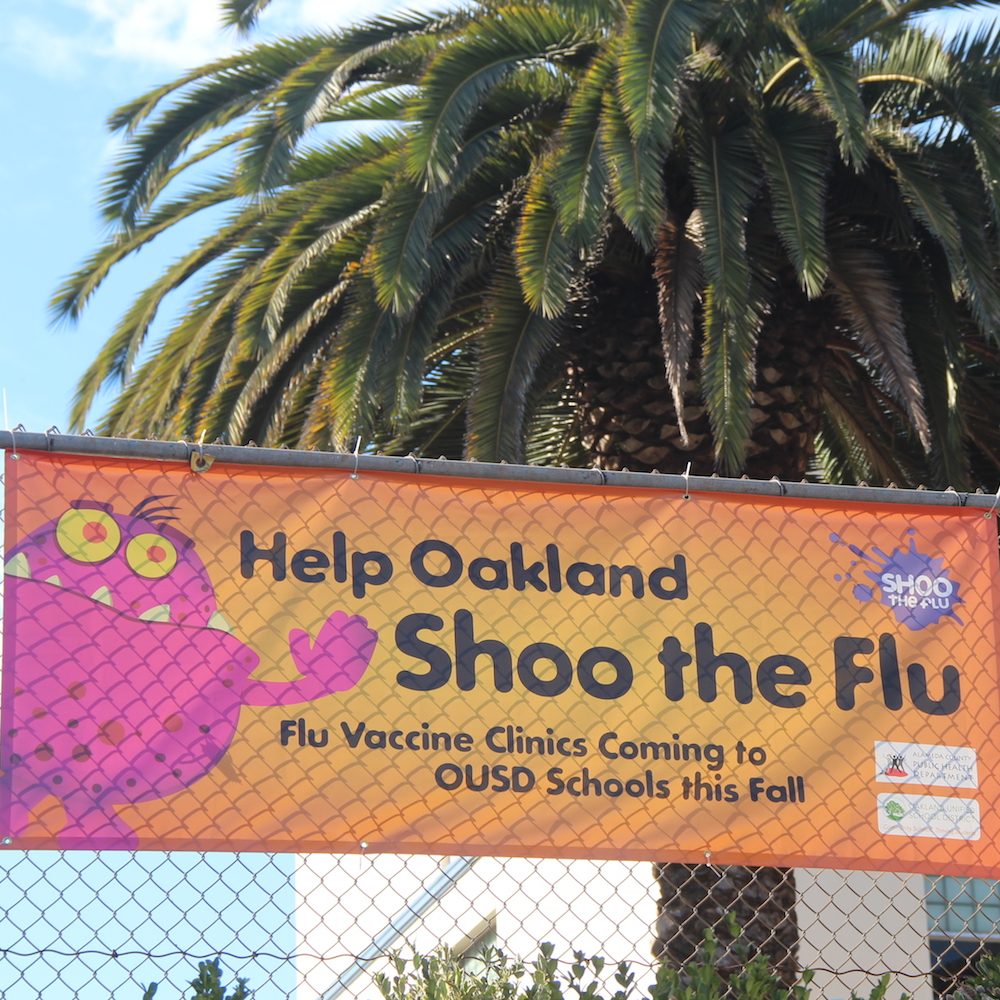
Spillover effects of school-located influenza vaccination
Working with Oakland Unified School District and Alameda County Public Health, we found that a city-wide school-located influenza vaccination program reduced influenza hospitalizations among older adults and illness-related school absences. A companion study showed that triangulating estimates from mathematical models and quasi-experimental approaches strengthens causal inference by leveraging methods with different sources of bias.
Evaluation of a city-wide school-located influenza vaccination program in Oakland, California, with respect to vaccination coverage, school absences, and laboratory-confirmed influenza: A matched cohort study. PLoS Medicine. 2020.
City-wide school-located influenza vaccination: A retrospective cohort study. Vaccine. 2021.
Estimating community-wide indirect effects of influenza vaccination: triangulation using mathematical models and bias analysis. American Journal of Epidemiology. 2024.
Funding: Flu Lab

