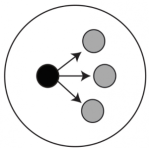
Spillover effects
Spillover effects are the impacts interventions have on non-recipients that are connected to recipients through social or geographic proximity (i.e., “herd effects”, “indirect effects”). Interventions that produce spillover effects have a greater population-level health impact and higher cost-effectiveness than those that do not and thus may be more promising for infectious disease control and elimination. While spillover effects of vaccines have been estimated for decades, we have spearheaded research to extend methods of spillover estimation to other types of interventions. To learn more, see our systematic review and methods synthesis in the International Journal of Epidemiology and our research on spillover effects of WASH interventions, school-located influenza vaccination, and reactive, focal malaria interventions.

Malaria
Many malaria interventions may confer indirect benefits, either on non-recipients or on non-malarial outcomes. Potential benefits may include reductions in malaria transmission to non-intervention recipients and non-malarial outcomes. My group conducted a re-analysis of a randomized trial that found that reactive, focal chemoprevention and vector control interventions reduced Plasmodium falciparum malaria prevalence among non-intervention recipients up to 3 km away in Namibia (see paper). Currently, we are collaborating on ongoing research to measure spillover effects of focal mass drug administration on Plasmodium vivax incidence in Peru. To measure the potential indirect benefits of interventions on non-malarial outcomes, we are collaborating on an ongoing trial in Tanzania that will compare active case detection using molecular testing, passive case detection using molecular testing, and passive case detection using rapid diagnostic tests on all-cause sick visits and non-malarial infections. Finally, we are investigating pathways through which intermittent preventive treatment for malaria in pregnancy and childhood influence inflammation, the gut microbiome, infections, and in turn, child growth in early life (see preprint). These studies use causal mediation analyses to identify the pathways through which different drug regimens influence child growth.

Household flooring
Recent water, sanitation, and hygiene (WASH) intervention trials found modest or no impacts on soil-transmitted helminth infections or diarrhea, suggesting that interventions did not block all transmission pathways. For example, there was evidence that WASH interventions did not interrupt transmission pathways through soil. In low-resource settings, many household floors are made of compacted soil. Children’s high levels of exposure to and consumption of soil may increase their risk of soil-transmitted helminth infections and other enteric pathogen infections. We and others have led observational studies that found that children in households with concrete floors have a lower prevalence of diarrhea and soil-transmitted helminth infection than those in households with soil floors (e.g., here, here). However, these findings may be strongly confounded by household wealth. In collaboration with the International Centre for Diarrhoeal Disease Research, we are conducting a randomized trial to rigorously measure whether installing concrete floors in homes with soil floors reduces household fecal contamination, child soil-transmitted helminth infection, and child diarrhea in a low-resource in rural Bangladesh (R01HD108196; trial registration here). With support from the Stanford University Woods Institute, we are investigating alternative “green” cements that are produced with fewer greenhouse gas emissions than traditional cement and that may produce the same health benefits (details here). Learn more about the trial on the CRADLE trial homepage.
Climate change and health
Climate change will lead to other profound shifts in the environment that will likely influence transmission of infectious diseases. We have investigated the association between climatic and environmental variables, diarrhea, and enteric pathogen infections among young children in rural Bangladesh (see paper). Ongoing work is investigating how climatic variables and distance to forest influence Plasmodium vivax incidence in Peru and how flooding influences prenatal depression in Bangladesh. Additionally, in collaboration with social scientists, we have developed and deployed a survey instrument to measure climate resilience in Bangladesh. This body of research lays the groundwork for the design and targeting of future climate adaptation interventions in rural low-income country settings.
Soil-transmitted helminths
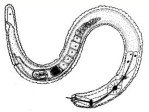
Though a large body of observational evidence suggests that WASH interventions can reduce soil-transmitted helminth (STH) incidence, few randomized trials have evaluated this question, and even fewer studies have used cutting edge diagnostics with high sensitivity and specificity. We have conducted both observational and randomized studies in Bangladesh to investigate whether water, sanitation, handwashing (WASH), and nutrition interventions reduce STH infections. In addition, we compared the performance of a new molecular STH diagnostic to the traditional microscopy-based approach. More recently, we have investigated whether finished household flooring (e.g., cement floors) is associated with lower STH and Giardia infection in young children in rural Bangladesh. To learn more, see our papers in PLoS NTDs papers on WASH and diagnostics and our Lancet Global Health paper on flooring.

Child growth
Children’s growth trajectories in early life influence their long-term health and development. In particular, stunting, a form of linear growth faltering, is associated with increased risk of illness, impaired cognitive development, and mortality. We conducted individual participant meta-analyses of over 35 longitudinal cohort studies of child growth from 15 low- and middle-income countries from 1990 to 2015. We found that the majority of stunting onset occurs from birth through 3 months of age, with lower incidence at later ages. Our findings suggest that prenatal, early postnatal, and possibly pre-conception interventions are needed to prevent most linear growth faltering. To learn more, see our articles on stunting, wasting, and risk factors associated with child growth faltering.

Influenza
School-located influenza vaccination programs have the potential to increase influenza vaccination among school-age children, who are responsible for the majority of influenza transmission. We are conducting an evaluation of Shoo the Flu, a city-wide program offering free influenza vaccination to elementary schoolchildren in Oakland, California since 2014. This evaluation is measuring the impact of Shoo the Flu on influenza vaccination coverage, influenza illness, influenza hospitalization, and school absenteeism. In addition to estimating impacts of the program on schoolchildren, we are measuring community-wide spillover effects and effect heterogeneity by race/ethnicity. We also triangulated findings related to spillover effects using two different modeling approaches.

Reproducibility
Our research leverages data science tools to increase transparency and reproducibility in epidemiology. We regularly publish analysis datasets and replication scripts. The data science best practices for transparency and reproducibility are summarized in a lab manual, which our team is continuously updating. In addition, we have developed an internal replication process that increases reproducibility by identifying and resolving errors prior to publication.
 jadebc.net